REVIEW · ATLANTA
Atlanta Street Art and BeltLine Tour with Happy Hour and Activity
Book on Viator →Operated by Unexpected Atlanta Tours & Gifts · Bookable on Viator
Street art in Atlanta is never just decoration. This 2.5-hour walk connects Cabbagetown street-art context with hands-on fun at happy hour art-making.
I like that the tour doesn’t treat graffiti, public art, and street art like one big category. You get clear explanations as you go, plus a guided photo-and-postcard finish that gives you something tangible to take home.
One watch-out: you’ll be taking lots of photos on a walking route, and restroom options are limited until the final stop, where businesses are generally for paying customers only.
In This Review
- Key things that make this Atlanta street-art tour worth your time
- Why This Atlanta Street-Art Walk Feels Like a Best-Of
- Carroll Street SE: Cabbagetown and the street-art basics that actually help
- Stacks Squares Murals: the thrill of walls that change
- Wylie Street Murals: Forward, Warrior!! and that famous Atlanta scale
- Krog Street Tunnel: graffiti history, preservation, and the change you can feel
- McCray’s Tavern happy hour: drink included, then you make your own
- Tiny Door 6 and the Eastside Trail: a small art idea with big charm
- How to get the most out of the 3:00 pm start
- Price and value: what you’re really paying for at $45
- Should you book this Atlanta street-art and BeltLine tour?
- FAQ
- FAQ
- How long is the Atlanta Street Art and BeltLine tour?
- Where does the tour start and where does it end?
- What’s included in the price?
- Do I get a souvenir from the tour?
- Are drinks included, and do you have nonalcoholic options?
- Where are restrooms available?
Key things that make this Atlanta street-art tour worth your time
- Cabbagetown labels the art for you so you can tell street art, public art, and graffiti apart.
- Wylie Street murals you’ll recognize fast, including Forward, Warrior!! on Wylie Street.
- Krog Street Tunnel explains the history and the preservation work behind the shifting walls.
- McCray’s Tavern adds a real creative break, with a happy hour drink and crafting prompts.
- Tiny Doors ATL gives a different kind of art scavenger hunt at the end of the walk.
Why This Atlanta Street-Art Walk Feels Like a Best-Of
If you’re the type who scrolls street-art photos at 2 a.m., you’ll get a lot out of this tour. It’s built like a tour of scenes—Cabbagetown, the BeltLine trail area, murals, and Krog Street Tunnel—then capped with a short creative activity. The goal is simple: you learn how to look, then you practice making.
At $45 per person for about 2 hours 30 minutes, the value comes from the mix. You’re not just paying for someone to point at walls. You’re paying for guidance on what you’re seeing, plus included supplies, a drink, and take-home photo keepsakes (a souvenir photo and postcard).
This is also a small-group format, with a maximum of 14 travelers, so your guide can answer questions without rushing you. In the past, guides such as Arielle, Glenn, Jay, and Leigh are names that show up for this style of tour leadership, and the common theme is time for questions and room to stop for photos.
If you come hungry, it can help to eat before you arrive. The happy hour drink is included, but it’s still a walking tour, and dinner waits for later.
Carroll Street SE: Cabbagetown and the street-art basics that actually help
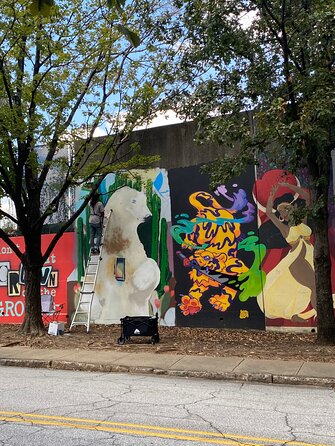
The tour begins at 198 Carroll St SE, right in the Cabbagetown orbit. This first stretch is where you get your mental framework. You’ll learn the differences between street art, public art, and graffiti, and why those categories matter in Atlanta’s context.
That sounds academic, but it’s practical. After a good explanation early on, you start noticing things you would otherwise miss: style choices, placement decisions, and what the artist seems to be communicating. You also start understanding why some work gets documented and preserved while other work is allowed to evolve.
You’ll have about 30 minutes here, and it’s a great place to take photos because the neighborhood gives you variety fast. Do expect some quick stops where you’ll want to zoom in. This is one of those tours where your phone camera becomes a learning tool, not just a souvenir machine.
Potential drawback in this first phase: if you’re expecting a lot of formal art lectures, you’ll be slightly underwhelmed. The pace is built for walking and visual learning, not sitting.
Stacks Squares Murals: the thrill of walls that change
Next up is Stacks Squares Murals, with about 15 minutes on site. The key detail here is that these murals are often-changing. That means your photos become part of the experience—because you’re catching a version of Atlanta’s street-art conversation in motion.
This stop is shorter on purpose. You’re meant to look, absorb, then move on while the tour is still building momentum. If you love spotting style patterns—color choices, lettering, faces, textures—this is a good stop to focus on details rather than trying to memorize everything.
What you’ll come away with is a stronger sense of how street art functions like a public gallery. Even when the work changes, the neighborhood identity and artistic tone stay in the conversation.
A small practical note: if you’re there on a day when a specific mural panel is in between updates, you still get the idea. The tour’s emphasis is on learning how to see the process, not just capturing one perfect shot.
Wylie Street Murals: Forward, Warrior!! and that famous Atlanta scale
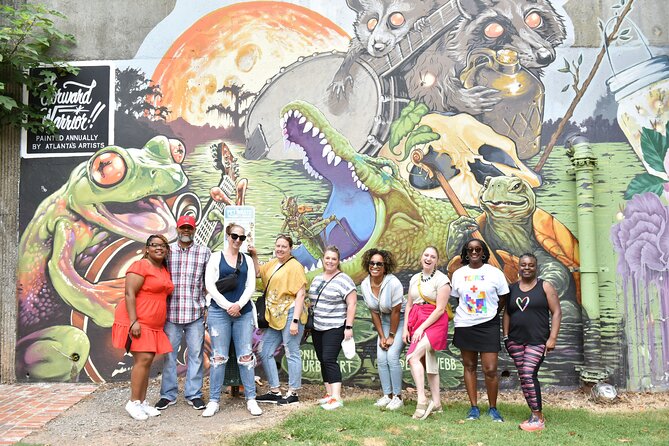
Then you head to Forward, Warrior!! along Wylie Street for around 30 minutes. This is where many people start recognizing the mural work from photos they’ve seen online, which makes this stop extra satisfying. You don’t have to rely on memory—you can compare what you thought you knew with what you’re standing in front of.
Mural work at this scale is hard to appreciate when you’re just passing by. Guided time helps you slow down enough to notice composition and storytelling. You also learn how Atlanta’s mural scene plays with visibility—how artists use public walls to make statements that are meant to be seen by everyone, not just visitors who buy tickets.
Photo tip for this stretch: stand back first, then step closer. Get one wide shot, then a second shot that frames a small section. The guided explanations tend to make those close-up frames more meaningful.
If you’re worried about too much repetition—murals, then more murals—you’ll be pleasantly surprised. The guide’s focus shifts. You’re not just seeing art; you’re learning why particular spots became famous and how the wider community reads them.
Krog Street Tunnel: graffiti history, preservation, and the change you can feel
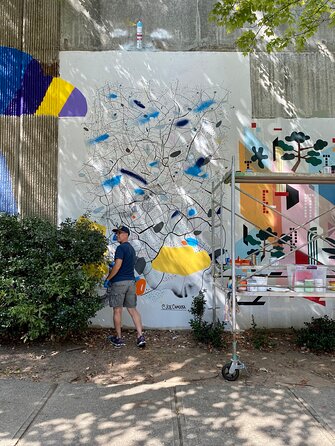
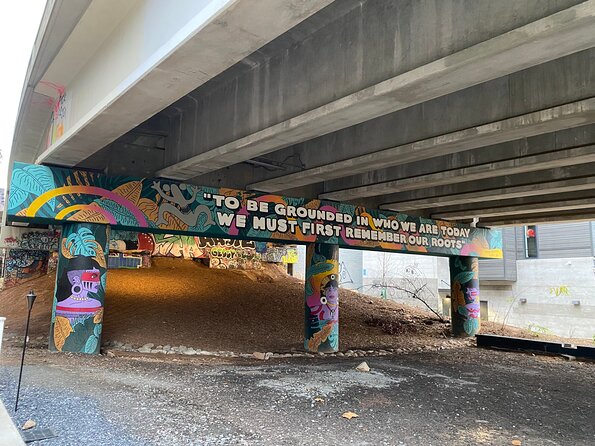
One of the most iconic stops is Krog Street Tunnel. You’ll spend about 15 minutes here, learning about the history of graffiti in the tunnel and the efforts underway to document and preserve the ever-changing art.
This stop is where street art turns from an outdoor photo walk into something closer to living documentation. Krog Street Tunnel is famous because the work doesn’t stay still. The tour helps you understand the balance between keeping a record and accepting that the walls evolve.
You’ll also explore different types of art in the tunnel. That variety matters because it helps you avoid the common mistake of thinking graffiti is only one style. You start seeing the range—lettering, characters, tags, layered work—each with its own logic and visual language.
Practical note: tunnels can feel damp and shadowy. Bring your best phone mode for low light if you use your camera without flash, and consider turning on any photo stabilization you have. You’ll get better results if you keep your stance steady rather than sprinting for the perfect frame.
McCray’s Tavern happy hour: drink included, then you make your own
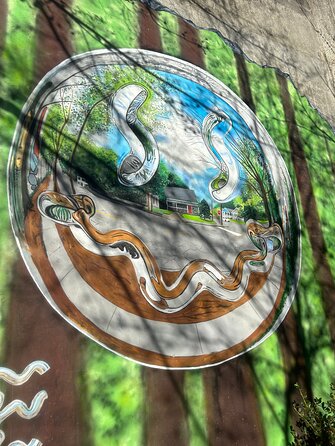
After the outdoor walls, this tour shifts to a more social pace at McCray’s Tavern. The happy hour stop runs about 30 minutes, and it includes your drink—alcohol or nonalcoholic.
Here’s the real win: you don’t just sip and watch. You’ll design your own street art with guidance from the guide, using prompts based on what you’ve learned so far. All crafting supplies are provided.
This is where the tour earns its “do something” reputation. The activity turns your new visual vocabulary into actual choices: lettering style, layout, color decisions, and theme. Even if you’re not an artist, you’ll finish with something that feels like yours because you made it based on the tour’s prompts.
It’s also a nice group moment. With a small group size, you can ask questions, compare ideas, and slow down without it feeling like you’re stuck at a table forever.
If you’re sensitive to noise, note that happy hour settings can be lively. The activity is still structured, but it’s not a quiet studio.
Tiny Door 6 and the Eastside Trail: a small art idea with big charm
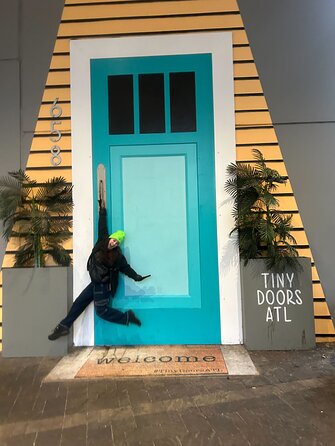
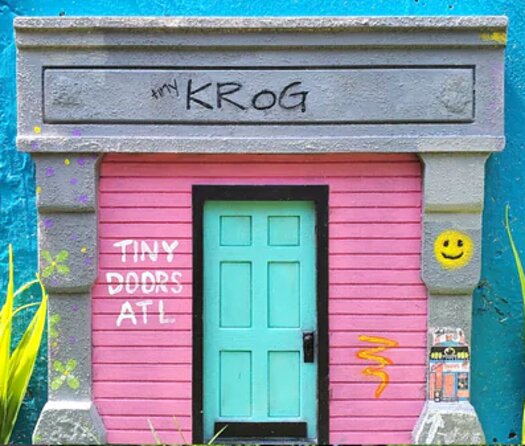
The final stop is Tiny Door 6 on the Eastside Trail, with about 15 minutes here. Tiny Doors ATL is a different kind of art prompt: small scale, whimsical placement, and stories that are meant to be discovered.
You’ll see three tiny doors and learn the inspiration behind Tiny Doors ATL. This ending is smart because it shifts your focus from wall-size murals to something personal and playful. It’s also a reminder that Atlanta’s street-art world isn’t only about big statements. Sometimes it’s about small surprises that reward curiosity.
Timing-wise, this is a good final stretch because you’re often ready to slow down. And once you’re done here, you’ll be right by the Krog Street Tunnel entrance area, with the tour ending at the corner of Krog St and Wylie St (the end point is listed at 737 Wylie St SE, Atlanta, GA 30316).
Restroom reality check: restrooms are located at the end of the tour at the last stop, and Cabbagetown businesses’ restrooms are for paying customers only. If you need a restroom before then, the tour points you to Krog Street Market about 1 mile from the start.
How to get the most out of the 3:00 pm start
The tour starts at 3:00 pm, which is a great time for photo light if the weather cooperates. Late-day sun can make murals look more dimensional, and the walking rhythm feels natural rather than rushed.
It’s also helpful that the experience provides ponchos if it rains. You’re outside for most of the route, so you’ll be grateful for that little safety net.
Bring comfortable walking shoes. This isn’t an intense hike, but you will be moving between art stops with photo breaks. Also, be ready for the “stop, look, talk, take pictures” cycle. That’s the core format.
Price and value: what you’re really paying for at $45
On paper, $45 can look like a bargain or a splurge depending on your travel style. Here’s how I’d judge it: you’re getting more than a guide-walk.
Included value stack:
- Guided street-art education across multiple iconic spots
- Supplies to make your own street art
- A happy hour drink (alcohol or nonalcoholic)
- A souvenir photo and postcard
- A resource guide dedicated to Atlanta street art
- Ponchos if weather turns
- A mobile ticket
If you’re the kind of person who loves street art but also wants to leave with an actual keepsake and an activity, this price makes sense. If you only want quick photos and zero talking, you might feel like some of the time is spent learning instead of snapping nonstop.
The sweet spot is clear: you’ll enjoy this most if you like turning observation into understanding, even if you’re not an art expert.
Should you book this Atlanta street-art and BeltLine tour?
I’d book it if:
- You want a guided way to understand street art vs public art vs graffiti in Atlanta
- You’re excited about Krog Street Tunnel and how it’s documented as it changes
- You like tours that end with something you made, not just something you saw
- You want a photo and postcard souvenir that feels like part of the tour
I’d think twice if:
- You need frequent restroom access during the walk (the main restroom option is at the end)
- You hate guided pauses and prefer purely self-directed exploring
- You’re trying to keep the whole afternoon completely unstructured
For most people who like authentic Atlanta neighborhoods and art you can’t get in a museum, this is a smart use of a few hours. You’ll walk away with context, images, and a handmade outcome.
FAQ
FAQ
How long is the Atlanta Street Art and BeltLine tour?
It runs about 2 hours 30 minutes (approx.).
Where does the tour start and where does it end?
It starts at 198 Carroll St SE, Atlanta, GA 30312, and ends at 737 Wylie St SE, Atlanta, GA 30316, just in front of the Krog Street Tunnel entrance at the corner of Krog St and Wylie St.
What’s included in the price?
The tour includes a guided walk, supplies to make your own art, a happy hour drink, a souvenir photo and postcard, ponchos in case of rain, and an exclusive resource guide for Atlanta street art.
Do I get a souvenir from the tour?
Yes. You’ll take home a souvenir photo and a postcard.
Are drinks included, and do you have nonalcoholic options?
Yes. Happy hour includes a drink, with alcohol or nonalcoholic options.
Where are restrooms available?
Restrooms are located at the end of the tour at the last stop. Cabbagetown businesses’ restrooms are for paying customers only. If you need to use one before the end, you can do so about 1 mile from the start at Krog Street Market.