REVIEW · LONDON
Booze, Brothels & The Bard: A Walking Tour of London’s Bawdy Borough
Book on Viator →Operated by Historic London Tours · Bookable on Viator
If you think London is only castles and museums, this changes your mind. This walking tour threads together Southwark’s darker corners and everyday pleasures, then ties them to Shakespeare and other literary giants in plain, story-first stops. I especially like the way the tour keeps you moving through real places (not just plaques), and I like that the group stays small enough for real back-and-forth with the guide. One thing to note: it is more of a fast-paced walk-by tour, so if you want to linger in every building, you may feel a bit rushed.
I went looking for value and got it. For $27.78, you’re paying for a guide-led loop that covers famous landmarks like London Bridge and Borough Market, plus lesser-seen sites like Crossbones Graveyard and the Old Operating Theatre. The only drawback I’d flag is that the highlights are spread out, so your best experience comes when you’re ready to walk for roughly two hours and enjoy the story beats as you go.
In This Review
- Key highlights you’ll feel immediately
- Why Southwark works so well on foot
- The money question: $27.78 for a two-hour guided loop
- Getting there: starting at Borough High Street, ending at Shakespeare’s Globe
- Stop-by-stop: what each place adds to the story
- 1) St George the Martyr: Marshalsea’s last visible piece
- 2) Crossbones Graveyard: the outcasts of Southwark
- 3) The Hop Exchange: Southwark’s beer trade in brick form
- 4) George: a last surviving galleried coaching inn
- 5) Old Operating Theatre Museum and Herb Garret: Europe’s oldest surviving operating theatre
- 6) London Bridge: the icon you can connect to everything else
- 7) Southwark Cathedral: London’s oldest surviving gothic church
- 8) Borough Market: a market with a thousand years of food culture
- 9) Winchester Palace: medieval prestige, now in remains
- 10) The Clink Prison Museum: the notorious prison site
- 11) Shakespeare’s Globe Theatre: the reconstructed stage tied to the bard
- The guide makes a big difference (and it matters here)
- Who should book this, and who might skip it
- Should you book Booze, Brothels & The Bard?
- FAQ
- How long is the walking tour?
- How much does the tour cost?
- Where do I start and where does the tour end?
- How large is the group?
- What language is the tour offered in?
- What’s included in the price?
- Are admissions required for the stops?
- Is it suitable for most travelers?
- What is the cancellation policy?
Key highlights you’ll feel immediately
- Small group size (max 15) keeps the pace human and the questions welcome
- A guided loop of real Southwark sites connects prisons, outcasts, beer trade, and famous literature
- Old Operating Theatre Museum and Herb Garret takes you from theatre history to medical history in one morning-style walk
- Borough Market and Shakespeare’s Globe give you the day’s light-and-sweet contrast after the darker stops
- Guide Tom’s style (mentioned in reviews) is story-driven, animated, and easy to follow
Why Southwark works so well on foot
Southwark is one of those London areas where you can feel layers. You’ll see the city’s practical side in the market and inns, its tough side in the prison sites, and its imagination side in the Shakespeare connection. This tour leans into that mix on purpose.
The main benefit for you is speed with context. In about two hours, you get bearings on a neighborhood that can otherwise feel confusing, especially if you only know it from one landmark. The walking format also makes the stories land faster, because each stop has a physical setting you can look at while the guide explains what happened there.
You can also read our reviews of more tours and experiences in London.
The money question: $27.78 for a two-hour guided loop
Let’s talk value, because this price point is what makes this tour easy to justify. At $27.78 per person for about 2 hours, you’re basically buying a guided route through a cluster of sites that otherwise would eat up time (and often add up in ticket costs when you start picking museums one by one).
One big reason the deal feels fair here: the tour stops list admission as free at each stop. That means your cost goes mostly to the guide and the structure of the route, not to piling up separate entry fees at every turn.
This tour also keeps your risk low in a practical way. If you’re deciding between a quick sightseeing add-on and a longer day out, this is the quick option that still covers a lot of ground without requiring museum planning.
Getting there: starting at Borough High Street, ending at Shakespeare’s Globe
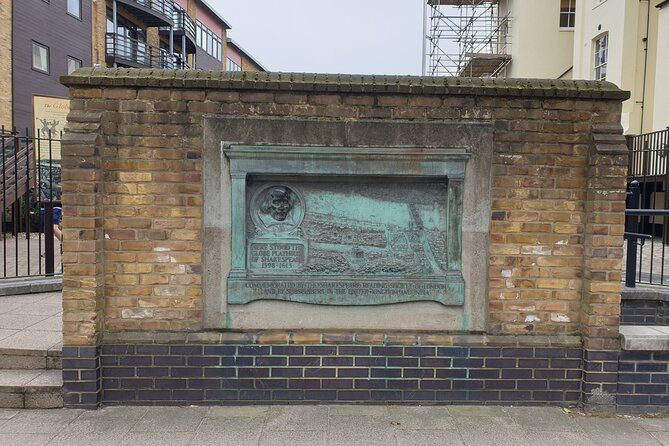
You start on Borough High St (SE1 1JX) and finish at Shakespeare’s Globe (21 New Globe Walk, SE1 9DT). That start-to-finish arc is helpful because it means you’re not doing the annoying thing where you return to your beginning point just to catch your last sight.
It also sets you up for a natural next step. After the tour ends near the Globe, you can easily tack on additional time in the area if you want. If you’re trying to fit this into a day that already includes other central sights, the location is straightforward to pair with other plans.
Public transportation is nearby, so you’re not forced into a long pre-walk. And because the meeting point is on a main road, you should have an easier time finding the group than you would with a tucked-away side street.
Stop-by-stop: what each place adds to the story
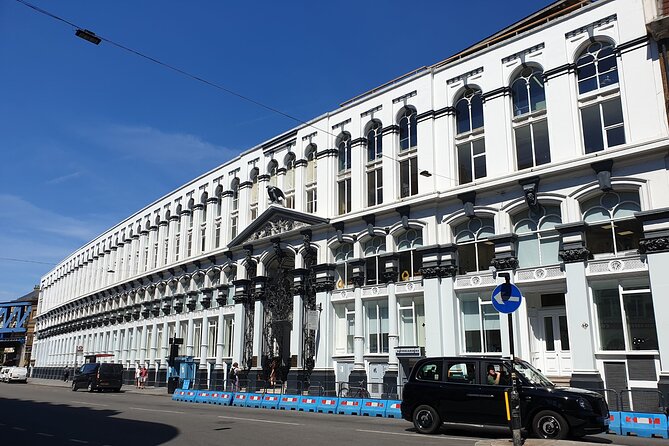
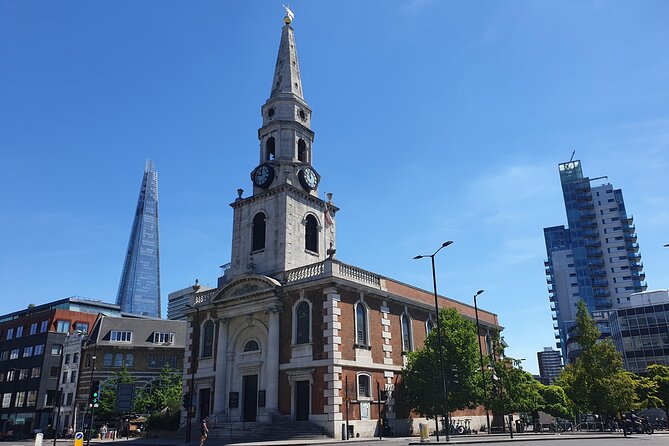
1) St George the Martyr: Marshalsea’s last visible piece
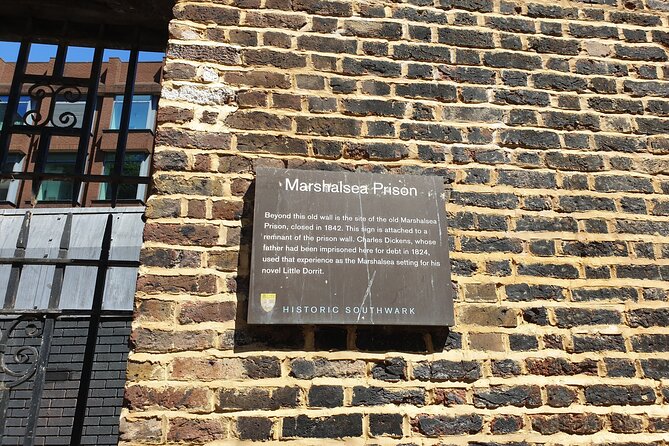
You begin at St George the Martyr, where the tour points out the only remaining part of Marshalsea Prison. This is a strong opener because it sets the tone: Southwark wasn’t just theatres and markets. It also held punishment and hardship.
What I like about this first stop is how it grounds the rest of your walk. When you start with the prison connection, the later mentions of outcasts and the Clink Prison Museum feel less like random trivia and more like a theme. You’ll leave this stop with a better sense of why Southwark’s reputation got the stories it did.
Possible drawback: if you’re not into darker subjects, this may feel heavy early in the tour. But that heaviness is also what makes the rest of the day’s contrasts so satisfying.
2) Crossbones Graveyard: the outcasts of Southwark
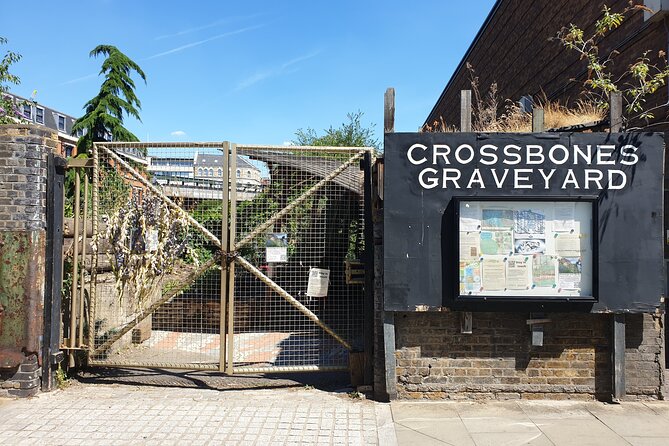
Next comes Crossbones Graveyard & the Garden of Remembrance, described as the final resting place for thousands of Southwark’s outcast dead. This is the kind of stop that makes you slow down even if the tour doesn’t.
The value here is emotional and historical. You’re not just learning a date; you’re learning that a neighborhood has human consequences behind every landmark. It also pairs well with the tour’s literary focus. Writers love conflict, survival, and social edges, and this stop helps you see why those themes showed up in the stories tied to the area.
Small practical tip: since it’s a short stop, listen closely to the guide’s context so you don’t miss the point while moving on.
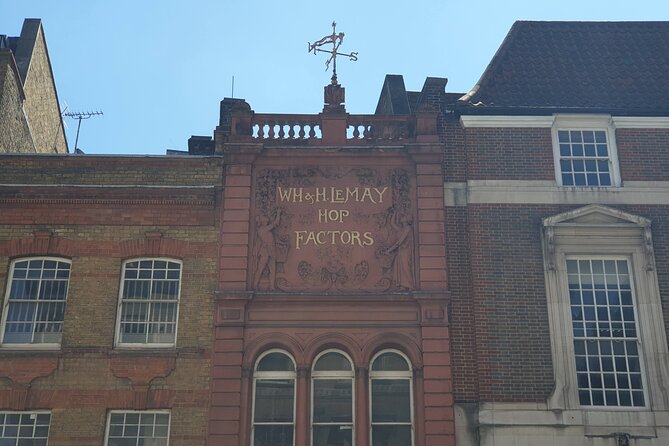
3) The Hop Exchange: Southwark’s beer trade in brick form
Then you shift to something lighter: The Hop Exchange, noted as the largest extant reminder of Southwark’s beer trade. This is where you get a change in rhythm. The tour turns from suffering and punishment to commerce and everyday life.
Beer and hops sound like background details until you connect them to how cities actually function. A neighborhood’s food and drink economy affects who lives nearby, where people gather, and which trades flourish. That’s why this stop matters: it explains the marketplace energy you’ll later feel at Borough Market.
If you only visit Southwark for one landmark, you might miss this kind of industrial-history perspective.
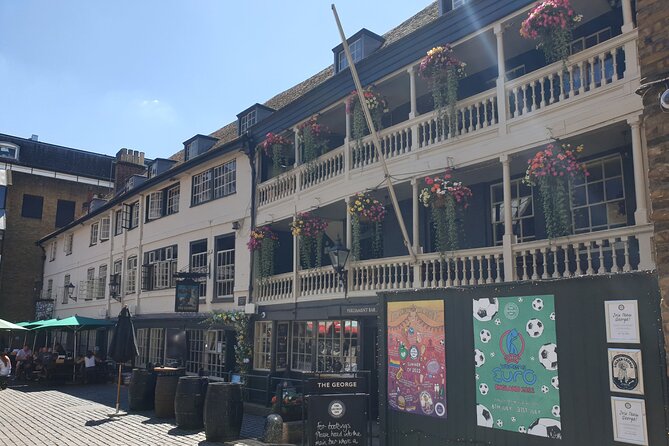
4) George: a last surviving galleried coaching inn
At George, the tour highlights London’s last surviving galleried coaching inn. Inns mattered because they were transport hubs before modern transit, and galleried inns also show how seriously cities designed hospitality and traffic flow.
This stop is a good “bridge” moment—literally and thematically. After the hop trade and before the medical and cathedral stops, you’re reminded that Southwark was also about people passing through and staying overnight, not only about prisons and markets.
5) Old Operating Theatre Museum and Herb Garret: Europe’s oldest surviving operating theatre
One of the most memorable turns on the walk is Old Operating Theatre Museum and Herb Garret, described as Europe’s oldest surviving operating theatre. It’s a surprising jump from famous literature to medical history, and that contrast is part of the point.
Why it works: it broadens your idea of what a “historic” London area contains. It’s not only about art and royalty. It’s also about how people treated injury, disease, and fear in earlier centuries. If you like stories that show daily life under stress, you’ll appreciate this stop.
Consideration: if you’re sensitive to medical history, go at your own comfort level and spend less time on any graphic explanations. The tour stop is brief, so you can control how you experience it.
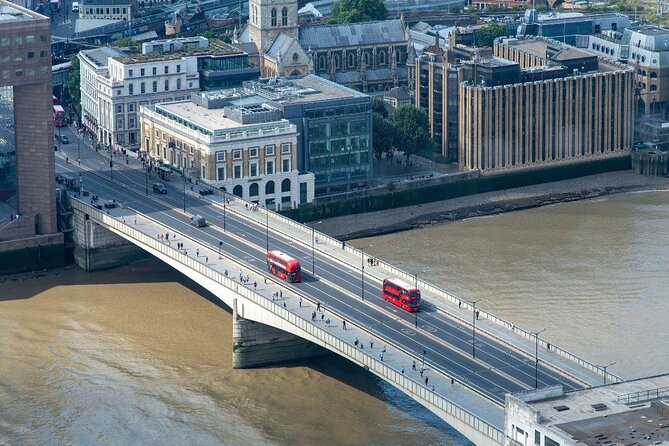
6) London Bridge: the icon you can connect to everything else
You then hit London Bridge, world famous and instantly recognizable. This isn’t just a photo moment. The real value comes from what the guide helps you connect it to: movement, passage, and how the bridge region feeds into Southwark’s identity.
Even when the stop is short, it’s useful. It helps you “place” the neighborhood within London’s larger layout.
7) Southwark Cathedral: London’s oldest surviving gothic church
At Southwark Cathedral, the tour describes it as London’s oldest surviving gothic church. This stop adds spiritual and architectural context after the bridge.
Cathedrals can feel like set dressing if you rush them. Here, the goal is to use the building as a landmark for the neighborhood’s long timeline. You’re seeing how far back the area’s identity goes, and why writers and artists would have found this visually and culturally strong.
Quick practical note: with a short stop, it helps to pick one feature to look at so your brain anchors the visit.
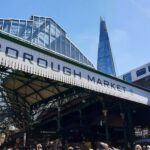
8) Borough Market: a market with a thousand years of food culture
Next is Borough Market, described as a one thousand year old food market. This is your payoff stop. After prisons, outcasts, trade buildings, and the operating theatre, you get the one place almost everyone wants: food culture.
Even if you don’t buy anything, you can still feel what “market life” means. It’s where the area’s daily rhythm would have happened, and markets are where social mixing is easiest.
If you’re the type who likes to snack as you walk, this is the moment. If you’re saving money, you can still browse and plan a separate visit later.
9) Winchester Palace: medieval prestige, now in remains
At Winchester Palace, you see the remains of one of the most prestigious homes in medieval England. This stop helps you understand social hierarchy. A palace site is not only about architecture; it’s also about power and what kinds of people lived close to the area’s action.
This is also a neat stop to help you make sense of why neighborhoods like Southwark attracted stories. When different classes, institutions, and trades sit near each other, literature has plenty of material.
10) The Clink Prison Museum: the notorious prison site
Then you visit The Clink Prison Museum, described as the site of the notorious Clink Prison. This is the tour’s second major “dark institution” moment, and it helps close the prison-and-punishment loop you started at Marshalsea.
What you’re doing here as a visitor is turning history into pattern recognition. You start to see that Southwark’s story isn’t one note. There are systems for control, systems for commerce, and systems for performance and storytelling.
11) Shakespeare’s Globe Theatre: the reconstructed stage tied to the bard
Finally, you reach Shakespeare’s Globe Theatre, described as a reconstruction of Shakespeare’s Globe. This is where the tour title makes the most sense.
By the time you arrive, you’re not just seeing a theatre building. You’re seeing the neighborhood that supported the kind of audience and social mix that theatre runs on. The Globe stop feels earned because the tour has already taught you what kind of world surrounded the stories people wanted to see.
If you time it right, you can use the ending as a launch pad for more Globe-area exploration.
The guide makes a big difference (and it matters here)
One theme in the experience feedback is guide quality. People specifically mention Tom, with praise for being punctual and for sharing colorful stories in an engaging way. That matters because this is a walk tour: if the guide’s delivery is flat, you’ll notice every short stop as a blur.
When the guide is strong, you get the connection between places. You start understanding why St George the Martyr ties into Crossbones, why the Hop Exchange belongs in the same route as Borough Market, and why the prison theme isn’t random when Shakespeare is involved.
For your planning: choose this tour if you like story-driven history more than you like quiet museum reading.
Who should book this, and who might skip it
This tour is a great fit if:
- You want a different side of London beyond big-ticket attractions
- You enjoy linking literature to real places
- You like walking and quick stops with a strong guide
- You’re curious about the full neighborhood picture: trade, belief, hardship, and art
You might skip it if:
- You expect long time inside multiple buildings
- You prefer deep museum-style studying over short guided glimpses
- You don’t like tours that cover a lot of ground in a short window
The sweet spot is the traveler who wants a morning (or short slot) to make Southwark make sense fast.
Should you book Booze, Brothels & The Bard?
Yes, if your goal is value + storytelling + real locations in about two hours. The price is low enough that you can treat it like a smart orientation to Southwark, then keep exploring on your own. And with a maximum group size of 15, you’re more likely to get a guide who can actually respond and steer you through the material.
I’d book it especially if you’re a Shakespeare fan, but you’ll still get plenty if you’re more into Dickens-era London vibes and the social edge implied by the tour title. Just go in knowing it’s a walk-by structure: listen, look, and take quick notes if you’re the type. Then use the Globe area at the end to slow down.
FAQ
How long is the walking tour?
The tour is about 2 hours.
How much does the tour cost?
It costs $27.78 per person.
Where do I start and where does the tour end?
You start at Borough High St, London SE1 1JX, UK and end at Shakespeare’s Globe, 21 New Globe Walk, London SE1 9DT, UK.
How large is the group?
The tour has a maximum of 15 travelers.
What language is the tour offered in?
The tour is offered in English.
What’s included in the price?
A walking tour guide is included.
Are admissions required for the stops?
The stops listed include admission as free.
Is it suitable for most travelers?
The information says most travelers can participate.
What is the cancellation policy?
You can cancel for a full refund up to 24 hours in advance of the experience start time.